
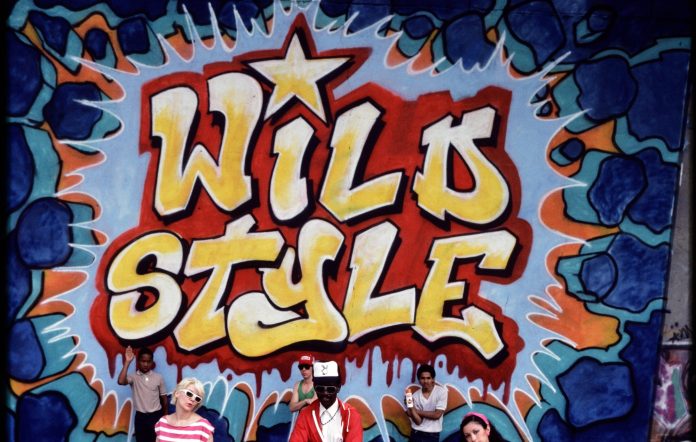
The plot is next-to-non-existent and you’ll see better acting in your local panto this Christmas, but 1983’s Wild Style is widely revered as one of the greatest hip-hop movies ever made. Certainly it was the first, capturing a disruptive sound and style that was in its infancy. Every shot vibrates with verve and spirit, whether it’s in the fuggy atmosphere of an underground club or the eye-popping graffiti that adorns the ruined New York cityscape.
“People are always saying to me, ‘Oh, I like your documentary – that’s one of my favourite documentaries,’” writer-director Charlie Ahearn explains via videocall from his home in Bushwick, Brooklyn. Clad in wide-rimmed specs, a jazzy maroon shirt and a matching cap, the 74-year-old has positioned himself in front of an artwork that depicts a figure scratching a set of decks. “I go, ‘Oh boy, you don’t know what struggles I went through!”
Now painstakingly restored in 4K for a new release via Arrow Films, Wild Style follows Zoro (Lee Quiñones), a young graffiti artist whose career reaches new heights after Virginia (Patti Astor), a journalist, arrives in the Bronx to write an article about its nascent hip-hop scene. Encouraged by his well-connected mentor Phade (hip-hop pioneer Fab Five Freddy), Zoro is soon knocking about with sophisticated downtown art scenesters who go ga-ga for his rough-and-ready style.
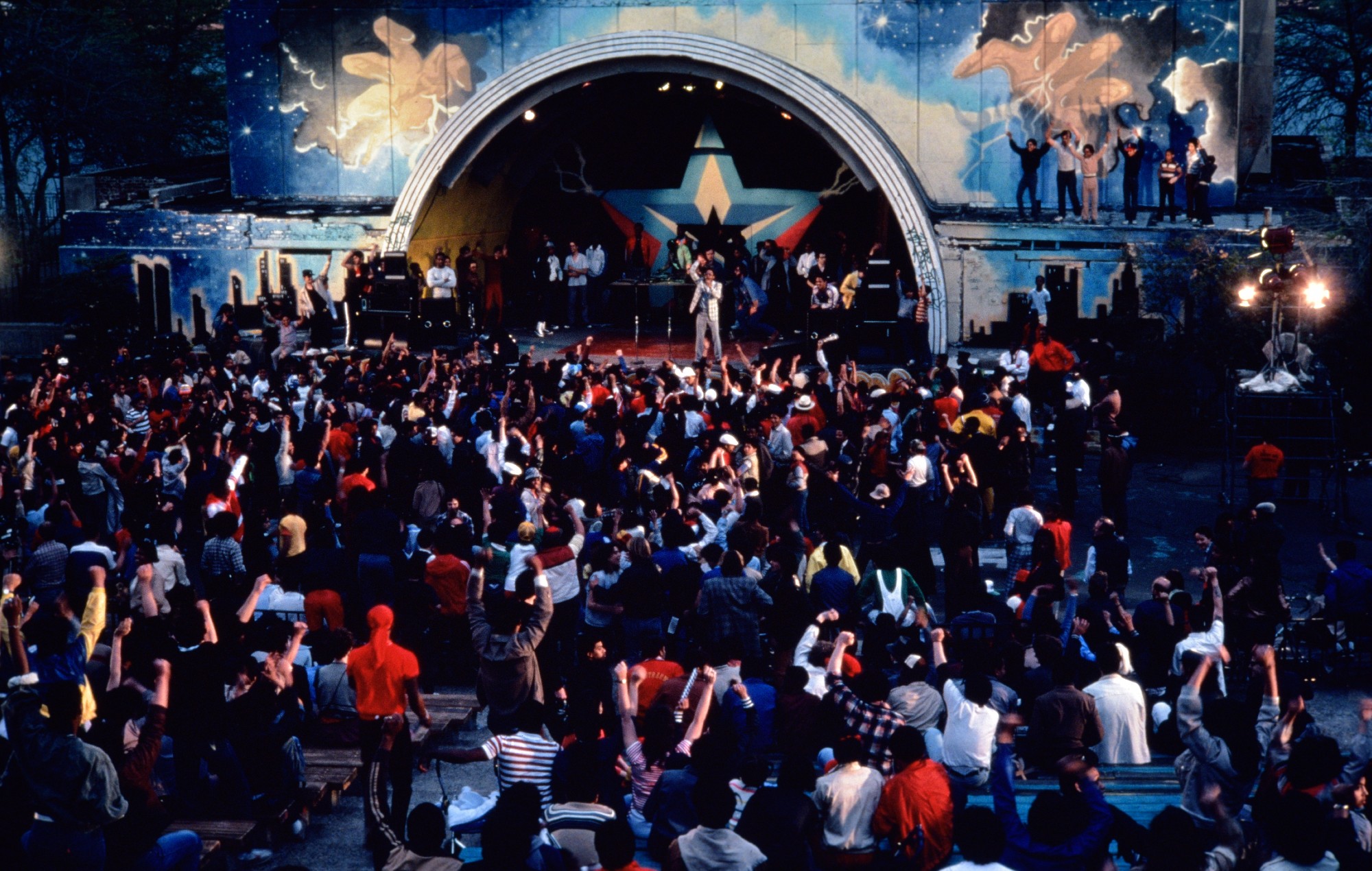
Wild Style real’s strength, however, lies in its performances. In fact, the narrative is mainly a device to showcase seminal early hip-hop artists such as Grandmaster Flash, The Fantastic Five and The Cold Crush Brothers, leading to a massive concert in a Lower East Side amphitheatre at the film’s conclusion. The performers ebb with pure, unfiltered creativity, long before the culture they’re inventing took over the world.
Given that its players were actual members of the scene, rather than professional actors, it’s understandable that some viewers have mistaken the drama for a documentary. Although it’s set in dirty old 1980s New York and some of the characters carry guns, there is a wholesomeness to what is essentially a community project starring excitable local kids.
“It’s definitely about innocence,” says Ahearn, a hard-boiled, motormouthed New Yorker who had previously directed only one movie, the Super 8-filmed kung-fu flick The Deadly Art of Survival. “I imagined the audience to be teenagers on 42nd Street in New York City. In the old days, it was where you went to get street nastiness without standing on a dangerous corner someplace in Harlem to score drugs – which was not my scene, but 42nd Street was because all the kung fu movies were playing there.”
Recommended
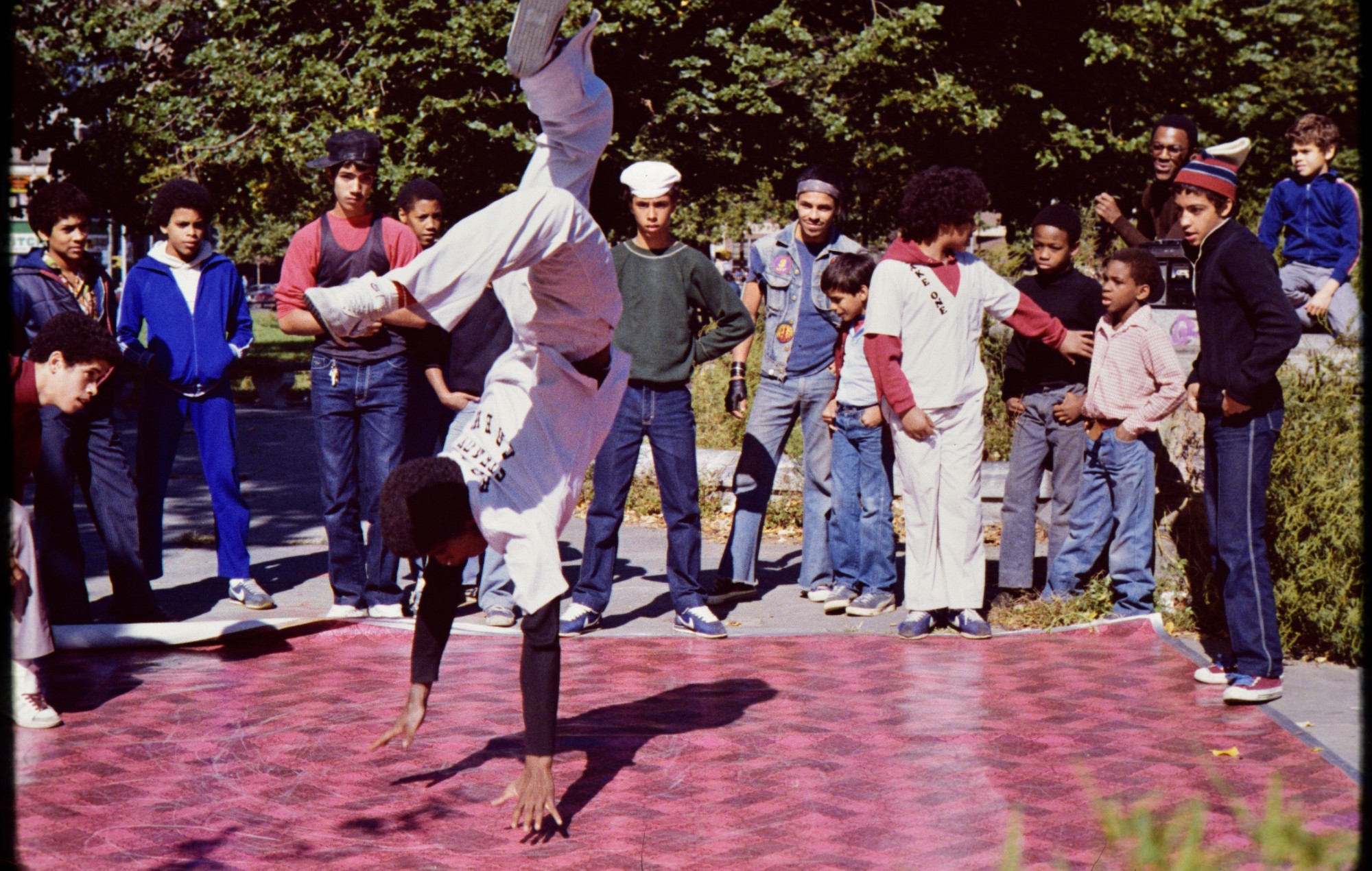
At this time, Ahearn explains, Black and Puerto Rican teenagers were somewhat improbably obsessed with kung fu, so his dalliance in the genre opened the door to their world. He also emphasises that Fab Five Freddy approached him to make the movie and vouched for him with the artists featured: “Fred put his arm around me and said, ‘This here is Charlie Ahearn. He’s my film producer and we’re making a movie about the hip-hop scene.’ That took all of one minute. It was that simple and that fast.”
Blondie guitarist Chris Stein co-produced the soundtrack, indicating the cross-cultural energy that seemed to ebb through New York at the time. After all, Ahearn began the month-long Wild Style shoot in October 1981, just a few years after the punk explosion that had shaken the city. Was some of that anarchic spirit echoing through the hip-hop scene? “Absolutely not!” Ahearn exclaims, apparently amazed by the idiocy of the suggestion. “No! Completely wrong! Did not happen. It was feeding off of disco!”
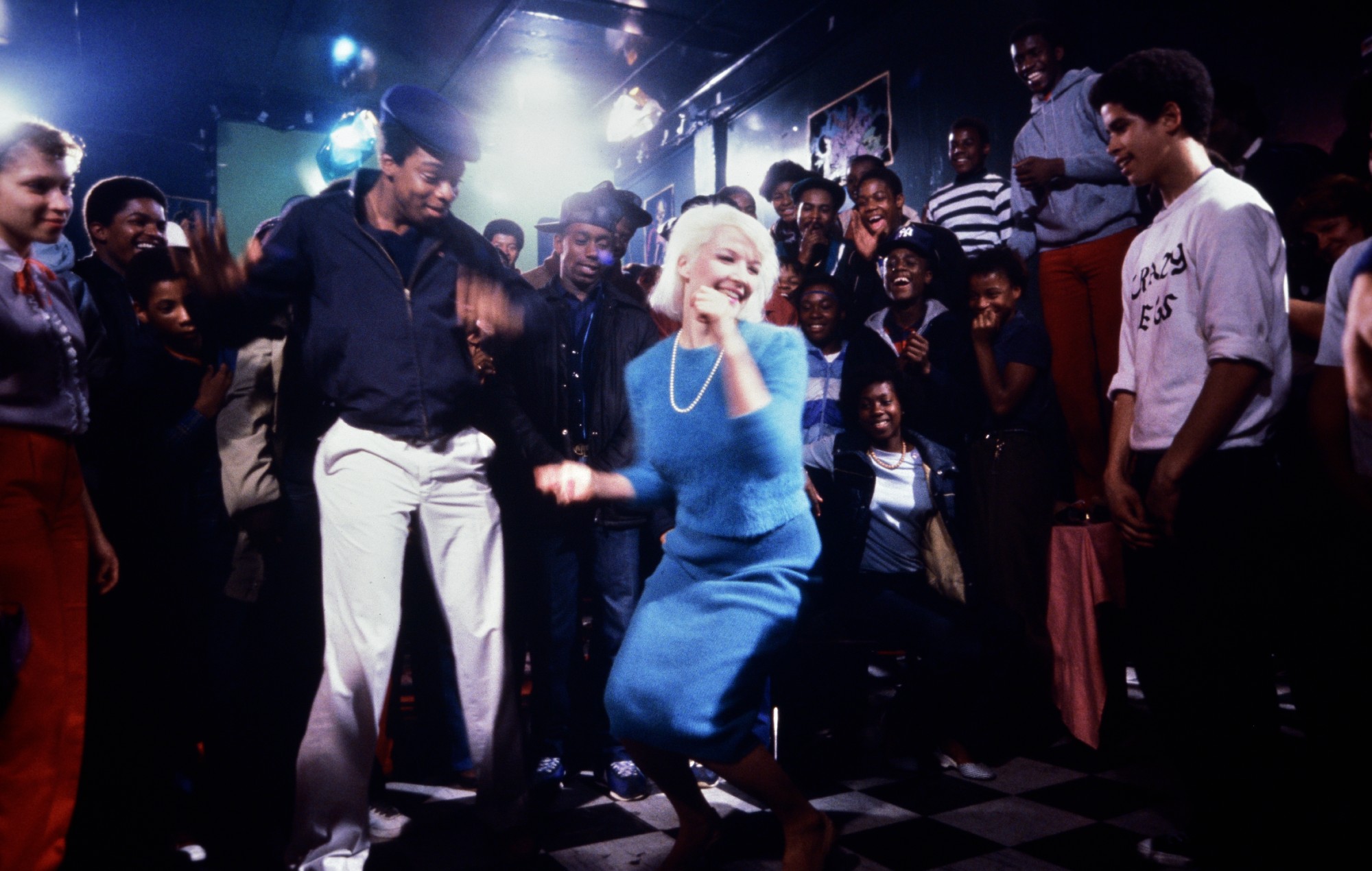
Still, Astor bears more than a passing resemblance to Debbie Harry, given her shock of white-blonde hair, while there are scenes featuring Blondie’s ‘Pretty Baby’ and groundbreaking new wave/rap mash-up ‘Rapture’. Did the film’s famous soundtrack not cost a fortune? “Nothing!” Ahearn retorts, appearing delighted to shoot down another question. “I’m the cheapest bastard that ever tried to make a movie – and I had no money anyway. Fred and I got together with some musicians two weeks before we made the movie and made a record of beats. We didn’t pay anybody. There was nothing.”
Surely he shelled out for the Blondie tracks, though? “We should have!” Ahearn admits, before gleefully putting his fingers to his lips. “Shh! This is not a subject to gloat about. We were friends – Chris was making our soundtrack! They mention Fab Five Freddy in ‘Rapture’s lyrics, so what goes around comes around.”
He guffaws at reports that the film cost $500,000, claiming not to know the exact figure but insisting it was significantly lower than that. How remarkable, then, that Wild Style’s legacy looms so large. Did he ever receive any pushback, though, as a white filmmaker responsible for the hip-hop movie?
“You mean did anyone point me out and say they don’t like this film because I’m exploiting people?” Ahearn parries immediately, his tongue-in-cheek contrariness briefly hardening. “No. It’s not a discussion I’m trying to open up for public debate. If someone wants to rail me, the internet is famous for this sort of thing. It’s a non-subject. What I’d like is for this interview to be about what the film is, not who I am.”
At this point, he brandishes the soundtrack’s new vinyl re-release and a Blu-ray of the movie, explaining that we should be discussing the quality of their production. In any case, the film speaks for itself, coursing with empathy and enthusiasm – no wonder it’s been sampled by everyone from Nas to A Tribe Called Quest. Upon release, Wild Style also found immediate success in Japan, the Caribbean and Germany.
“It’s the beginning of a worldwide culture,” Ahearn says, sounding earnestly proud of his achievement. “It’s the first taste that many people had of this culture. We’re not talking about a little audience. When the movie played in Times Square, you had a line going around the block for days. It’s not about hipsters – it has broad appeal. It’s like a new food source. When people taste it, they talk to their friends about it.”
‘Wild Style’ is available to stream exclusively now on the Arrow Video Channel and to own on 4K UHD & Blu-ray